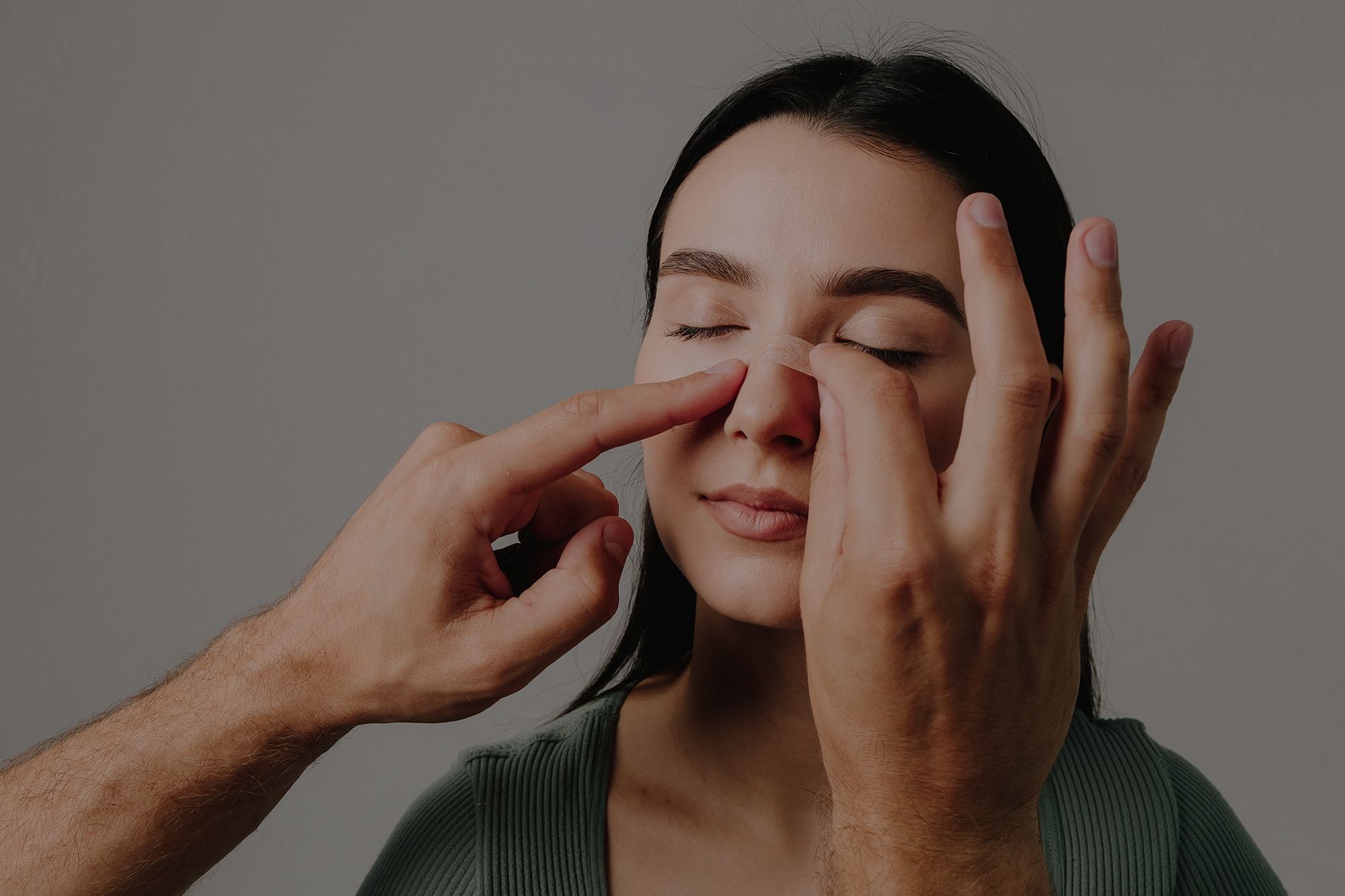
Common Questions About Rhinoplasty and Snoring
Snoring is a common concern for people considering rhinoplasty, particularly when nasal breathing already feels restricted. Here are answers to the most common questions about rhinoplasty and snoring, including when surgery may help, what is normal during recovery, and what options are available if snoring continues.
Can Rhinoplasty Stop Snoring?
Rhinoplasty surgery can help reduce or stop snoring in certain patients, but the outcome depends on the underlying cause of the snoring.
Snoring often occurs when airflow becomes turbulent as it passes through narrowed or obstructed nasal passages. Structural issues such as a deviated septum, internal nasal valve collapse, enlarged turbinates, or previous nasal trauma can all contribute. When these issues are corrected as part of rhinoplasty or septorhinoplasty, nasal airflow may improve significantly, which can reduce snoring.
However, snoring is not always caused by the nose alone. If it is related to factors such as throat anatomy, tongue position, obesity, alcohol use, allergies, or conditions like asthma, rhinoplasty on its own may not resolve the problem completely. In these cases, surgery may still improve nasal breathing, but snoring could persist for other reasons.
During a consultation, your surgeon will assess your nasal structure and discuss whether rhinoplasty is likely to help with your snoring or whether additional investigations or treatments are required.


What Nasal Problems Linked to Snoring Can Rhinoplasty Correct?
Rhinoplasty surgery can address several structural nasal issues that commonly contribute to snoring:
- Deviated septum – Straightening the septum improves airflow through one or both nostrils
- Nasal valve collapse – Strengthening the internal or external nasal valves helps prevent airway narrowing during breathing
- Enlarged turbinates – Reducing turbinate size can relieve chronic nasal blockage
- Post-traumatic deformities – Correcting internal collapse after injury may improve airflow
- Congenital nasal asymmetry – Structural imbalance present from birth can be surgically refined
In many cases, functional improvements are combined with aesthetic changes, allowing patients to breathe better while also achieving a balanced nasal appearance.
Can Rhinoplasty Help With Sleep Apnoea?
For most patients, snoring improves within 4 to 8 weeks after surgery as swelling decreases and nasal breathing becomes clearer. In some cases, mild snoring may persist a little longer, particularly after more complex functional or revision procedures.
Internal healing of the nose continues for up to 12 months, so subtle changes in breathing can occur over time. If snoring remains unchanged or worsens beyond the early recovery phase, further assessment is recommended.

Is Snoring Normal After Rhinoplasty Surgery?
Yes. Snoring is very common in the early weeks following rhinoplasty and is usually temporary.
After surgery, the tissues inside the nose swell as part of the normal healing process. This swelling narrows the nasal passages in a similar way to a heavy cold, increasing airflow resistance and making snoring more likely. Nasal splints, internal sutures, and temporary crusting can also contribute.
Most patients notice gradual improvement as swelling reduces. Snoring often settles over several weeks, although full internal healing can take several months. During this time, your surgeon will monitor your progress to ensure recovery is proceeding as expected.
How Long Does Post-Rhinoplasty Snoring Last?
For most patients, snoring improves within 4 to 8 weeks after surgery as swelling decreases and nasal breathing becomes clearer. In some cases, mild snoring may persist a little longer, particularly after more complex functional or revision procedures.
Internal healing of the nose continues for up to 12 months, so subtle changes in breathing can occur over time. If snoring remains unchanged or worsens beyond the early recovery phase, further assessment is recommended.

What If Snoring Doesn’t Go Away After Rhinoplasty?
If snoring persists beyond the initial healing period, it is important to speak with your surgeon. Ongoing snoring may indicate:
- Residual internal swelling
- Scar tissue affecting airflow
- Persistent septal deviation or valve weakness
- Turbinate regrowth
- A non-nasal cause such as throat anatomy or sleep position
Your doctor may examine the inside of your nose using specialised instruments to check that healing is complete and that the airway is clear. In some cases, medical treatment or lifestyle changes are sufficient. In others, further surgical refinement may be considered if there is a clear structural issue affecting breathing.
Revisional rhinoplasty is only recommended when there is a genuine functional or structural problem and when the potential benefits outweigh the risks.
Can Rhinoplasty Make Snoring Worse?
Temporarily, yes. In the short term, swelling and healing changes can make snoring more noticeable. This is expected and usually resolves.
Long-term worsening of snoring is uncommon when surgery is performed by an experienced surgeon with careful attention to nasal support and airway function. Preserving or strengthening nasal structures is essential to avoid collapse that could impair breathing.
Choosing a surgeon with expertise in functional nasal surgery is key to minimising this risk.
Is Septoplasty Different From Rhinoplasty for Snoring?
Septoplasty focuses specifically on straightening the nasal septum to improve airflow and is often performed to address breathing difficulties and snoring. Rhinoplasty reshapes the external nose and may include internal corrections as well.
Many patients benefit from a combined septorhinoplasty, which addresses both functional breathing concerns and nasal appearance in a single procedure. Your surgeon will advise which approach is most appropriate based on your anatomy and goals.
Are Non-Surgical Treatments Better Than Rhinoplasty for Snoring?
Non-surgical treatments can be effective depending on the cause of snoring. These may include:
- Treating allergies or nasal inflammation
- Weight management
- Reducing alcohol intake before bed
- Positional therapy
- Nasal sprays or dilators
- CPAP or oral appliances for sleep apnoea
Rhinoplasty is considered when a clear structural nasal problem is contributing to airflow restriction and when non-surgical measures have not provided adequate relief.
How Do You Know If Snoring Is Coming From the Nose or Throat?
Determining the source of snoring requires a careful clinical assessment. Nasal snoring is often associated with chronic congestion, mouth breathing, or difficulty breathing through the nose during the day. Throat-based snoring may be louder, more irregular, and linked to sleep apnoea.
During your consultation, your surgeon may assess nasal airflow, internal structures, and overall airway anatomy. In some cases, referral for a sleep study or ENT assessment may be recommended.
Can Revision Rhinoplasty Improve Snoring?
Revision rhinoplasty can improve snoring if previous surgery has left internal structural weaknesses, scarring, or valve collapse that restrict airflow. Revision procedures are complex and require advanced expertise, particularly when restoring both function and support.
A detailed assessment is essential to determine whether revision surgery is likely to provide meaningful improvement.
Consultation and Specialist Care at Symmetry Clinic
At Symmetry Clinic, snoring and breathing concerns are assessed alongside aesthetic goals to ensure a balanced, functional outcome. Consultations include detailed nasal examination and state-of-the-art 3D imaging to support accurate planning.
Surgery is performed by Mr Santdeep Paun, FRCS, Consultant Nasal and Facial Plastic Surgeon, with extensive experience in both functional and aesthetic rhinoplasty, including complex and revision cases.
Appointments are available at Harley Street and The Shard in London. Initial consultations are £275 and include a comprehensive assessment and imaging. Concierge support is available for travelling patients, including assistance with accommodation and transport.
If you are concerned about snoring, breathing, or nasal structure, booking a specialist consultation can help determine the most appropriate and effective treatment approach for your individual needs.
Articles


Opening Hours
MONDAY
9 am - 6pm
TUESDAY
9 am - 6pm
WEDNESDAY
9 am - 6pm
THURSDAY
9 am - 6pm
FRIDAY
9 am - 6pm
SATURDAY
Closed
SUNDAY
Closed
Harley Street
9 Harley Street
London
W1G 9AL
Tel: +442074070660
London Shard
6th Floor, Suite 651 , HCA at The Shard
St Thomas Street
London
SE1 9BS
Tel: +442074070660

Our Clinic
Symmetry Clinic
9 Harley Street
London
W1G 9AL
Disclaimer: Results may vary from person to person and treatment to treatment